

It is not enough to find the construction area of a house by simply taking length * width * number of floors! In quoting and calculating the construction area, to be accurate, it is necessary to pay attention to the coefficients specified for floors and architectural components. All information about how to calculate house area Exactly, to help you easily estimate construction and have a basis for working with contractors will be detailed in this article.
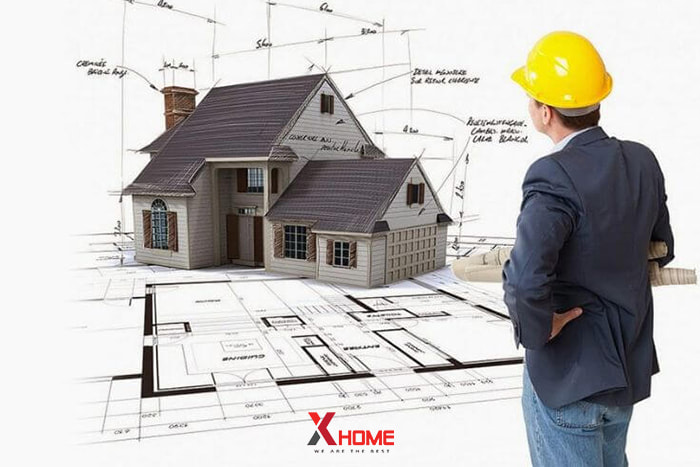
You need to calculate the exact house construction area
Calculating the area of a house is not simply a matter of numbers. It has a key meaning, directly affecting the house construction plan as well as the budget estimates. Below are 5 benefits associated with the area of a house:
- Construction cost estimate: This is the most important basis for contractors to give quotes, complete house construction contractThe more accurate the area, the more realistic the cost estimate, helping you to be proactive about your finances and avoid unnecessary expenses.
- Apply for a building permit: The building permit application must include information about the construction area. Correct calculation helps the application to be approved quickly, avoiding errors that need to be edited.
- Compliance with legal regulations: Vietnam Construction Standards (VCS) and local regulations have limitations on building density, height, and setbacks. Calculating the correct area helps ensure your project is legal.
- Optimal functional design: Understanding the allowable area helps architects arrange space reasonably, maximize functionality and ensure the aesthetics of the house.
- Asset valuation: Construction area is a factor that constitutes the future value of real estate.
“Construction area” and related concepts need to be distinguished
To calculate the exact house construction area, you need to clearly understand the following terms:
- Construction area (Total floor area): Is the total covered area of the building, calculated from the outer edge of the surrounding wall, including the floor and auxiliary items such as porch, lobby, outside stairs, swimming pool, structure… Often used to calculate construction and land-related costs.
- Floor area: The total usable area of the floors, calculated from the inside edge of the wall, including rooms, hallways, stairs, etc., and is the basis for calculating construction density and usable area. This is part of the construction area.
- Usable area: This is the actual area inside the house that you can use, measured according to the clear dimension (distance between opposite walls, not including wall thickness and columns).
- Wall area: Usually used for apartments, including the area of surrounding walls, room partitions, columns, and technical boxes inside the apartment.
See more: What is raw house construction and detailed items?
How to calculate detailed house construction area for each item
Below are the calculation methods and reference coefficients for common items, compiled by XHOME Saigon and often applied in estimates:
General formula
The general principle is to add up the area of each construction item, in which some items will be multiplied by the conversion factor. Calculate the area according to the formula the shouted later:
Construction area = Usable floor area of each floor (100%) + Total area of other items (Foundation, Roof, Yard, Basement,...) x Corresponding conversion factor.
Steps to calculate area and estimate house construction cost:
- Step 1: Determine the number of floors and construction area (length, width)
- Step 2: Calculate the area of each part (according to the coefficient specified for each part below).
- Step 3: Add floors, sections (balconies, foundations, roofs) * construction unit price per m2.
A. Foundation
The coefficient for calculating the foundation area depends on the type of foundation and ground conditions:
- Single foundation: 40% ground floor area.
- Ice foundation:70% of ground floor area (depending on whether the ground floor is concreted or not).
- Pile foundation (excluding piles): 50% ground floor area.
- Raft foundation or 2-way foundation: 100% ground floor area.
B. Basement
Basement area calculation coefficient depends on depth compared to the top of the ramp code:
- Depth from 1m – under 1.3m: 150% of basement floor area.
- Depth from 1.3m – under 1.7m: 170% of basement floor area.
- Depth from 1.7m to under 2m: 200% of basement floor area.
- Depth from 2m and above: 220%Basement floor area.
C. Floors (Ground floor, first floor, mezzanine)
- Floor area of each floor (ground floor, upper floors): Calculate 100% of actual area.
- Mezzanine:
- Construction area of mezzanine floor: Calculated at 100%.
- Open space area (if any):
- If the cell is blank ≤ 8m²: Calculate 100% of the area of the empty cell.
- If the empty space is larger than 8m²: Calculate 50% of the empty space's area.
D. Roof
The coefficient for calculating roof area varies according to roof type and material:
- Reinforced concrete flat roof (RC): 50% roof area.
- Roofing (including purlins): 30% of the roof area is sloped.
- Roof tiles with iron/steel trusses: 70% of the roof area is sloped.
- Reinforced concrete roof with tiles (including lito system): 100% of the roof area is sloped.
- Note: The area of a sloping roof is usually calculated by the slope (Pythagoras's theorem can be used if necessary).
E. Balcony, terrace
- Balcony:
- Covered: 100% area.
- Uncovered: 50% of area.
- Rooftop:
- Uncovered: 50% of area.
- With roof, trellis, pergola (depending on coverage and finishing): 100% area.
F. Other items
- Yard (front, back, side): 70% of the area (depending on the structure, whether it is tiled, has a fence...). Small yards <15m² with columns and surrounding walls can be counted as 100%.
- Skylight/Atrium (outside mezzanine area):
- Area < 8m²: Calculate 100% of area.
- Area ≥ 8m²: Calculate 50% of area.
- Loggia: Usually calculated at 70% of the area.
- Tum (Rooftop/cage): If there is a roof, surrounding walls and it can be used, then calculate 100% of the area.
- Staircase: Calculate 100% of the stair space occupied by each floor.
Example illustrating how to calculate the area of a townhouse
Suppose you want to build a 3-storey townhouse, plot size 5m x 15m.
- Area of each floor: 5m x 15m = 75m².
- Foundation type: Pile foundation.
- Roof type: Reinforced concrete flat roof.
- Balcony: Each floor has 1 uncovered balcony, size 1m x 5m.
How to calculate expected house construction area:
- 3-storey floor area: 75m²/floor x 3 floors = 225m² (Coefficient 100%).
- Pile foundation section: 75m² (ground floor) x 50% (pile foundation coefficient) = 37.5m².
- Reinforced concrete roof section: 75m² (top floor) x 50% (flat roof coefficient) = 37.5m².
- Uncovered balcony section:
- Area of 1 balcony: 1m x 5m = 5m².
- Total area of 3 balconies: 5m² x 3 = 15m².
- Chargeable area: 15m² x 50% (coefficient of uncovered balcony) = 7.5m².
See more: Building finished house
Total expected construction area: 225m² (floor) + 37.5m² (foundation) + 37.5m² (roof) + 7.5m² (balcony) = 307.5m².
Note: This is a reference example, the coefficient can be adjusted depending on the specific design and construction unit.
Factors to ensure accuracy when calculating house construction area
Detailed design drawings: Clear architectural and structural drawings are required to measure and identify items.
Identify the correct type of structure: The type of foundation, roof, and materials used will directly affect the applicable coefficient.
Local regulations update: Each locality may have its own regulations, which need to be carefully researched.
Expert advice: For complex projects or if you are unsure, seek advice from an architect, engineer or reputable construction company like XHOME Saigon.
Use support tools: There are some software and apps that can help you get a rough estimate, but always double check with a professional.
Legal regulations affecting the calculation of house construction area
Before you start calculating, you need to master some basic legal regulations and building permit in Viet Nam:
Maximum building density: The percentage of land area allowed for construction of a building on the total area of the plot. This density depends on the area of the plot, location (inner city, suburbs) and height of the building.
Example according to QCVN 01:2021/BXD for urban individual houses:
Plot ≤ 90m²: Maximum density 100%
Plot 100m²: Maximum density 90%
Plot 200m2: Maximum density 70%
Plot 300m²: Maximum density 60%
Plot 500m2: Maximum density 50%
Plot ≥ 1000m²: Maximum density 40%
Note: Actual density may vary depending on the detailed planning in each area. Therefore, you should check specific local regulations or consult a professional unit before designing and applying for a construction permit.
See more: Construction supervision
Minimum area of land, house, room: There is a difference between urban and rural.
Maximum height and number of floors: Usually related to road width.
Building setback: Minimum distance from the construction to the land boundary or road boundary.
Local regulations: Especially in Ho Chi Minh City, it is necessary to refer to decisions such as Decision 135/2007/QD-UBND, Decision 45/2009/QD-UBND, and the latest updated documents.

Legal regulations affecting the calculation of house construction area
See side: What is MEP?
XHOME Saigon - A reputable turnkey home construction unit
Job calculate house area is an important stepping stone for a quality project. At XHOME Saigon, we understand that every house is a home, a big investment. With a team of experienced architects and engineers, we not only help you:
Calculate construction area exact by category.
Prepare detailed cost estimates, transparent.
Optimal design consulting Functional and aesthetic, suitable for budget.
Support for construction permit procedures.
Professional construction, ensuring quality and progress.
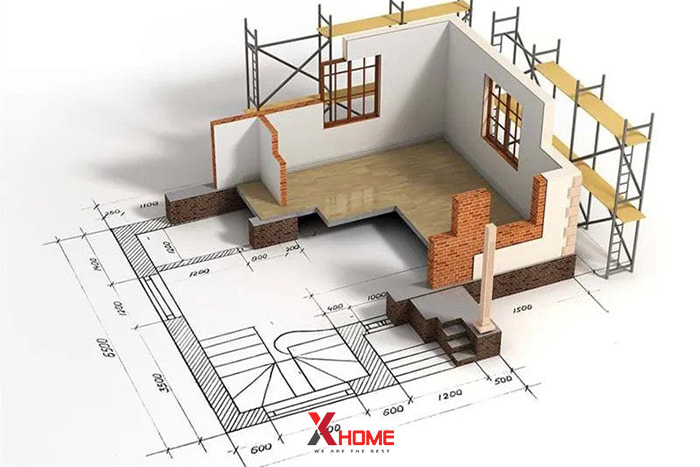
Calculating the area of the house is an important step.
See more: Top best turnkey home construction companies in HCMC
Accurate calculation of construction area is a solid foundation for the home building process, helping you control costs, ensure legality and own a living space as desired. Hopefully the detailed instructions from XHOME Saigon have provided you with useful information. Wishing you success on your journey to build your dream home!
Don't hesitate CONTACT XHOME Saigon NOW to be Free Consultation , and Get a detailed quote for your dream project.
Hotline: 0899.199.786
Address: 1st Floor, Orient Building, 331 Ben Van Don, Ward 1, District 4, HCMC
Website: xhomesg.com.vn


