

In architecture and interior construction Luxurious and sophisticated, walnut wood is no coincidence that it's always been hailed as a symbol of power, class, and refined taste. For homeowners, owning a living space crafted from this precious wood is not only a way to assert social status but also an investment in lasting value. However, transforming raw, rustic wood into artistic masterpieces in a living space requires an extremely rigorous process of research, design, and craftsmanship. This article will explain. A guide to designing and constructing interior spaces with natural walnut wood for villas. The most comprehensive guide, providing you with in-depth knowledge, practical experience, and important considerations from A to Z to create a perfect, luxurious living space.
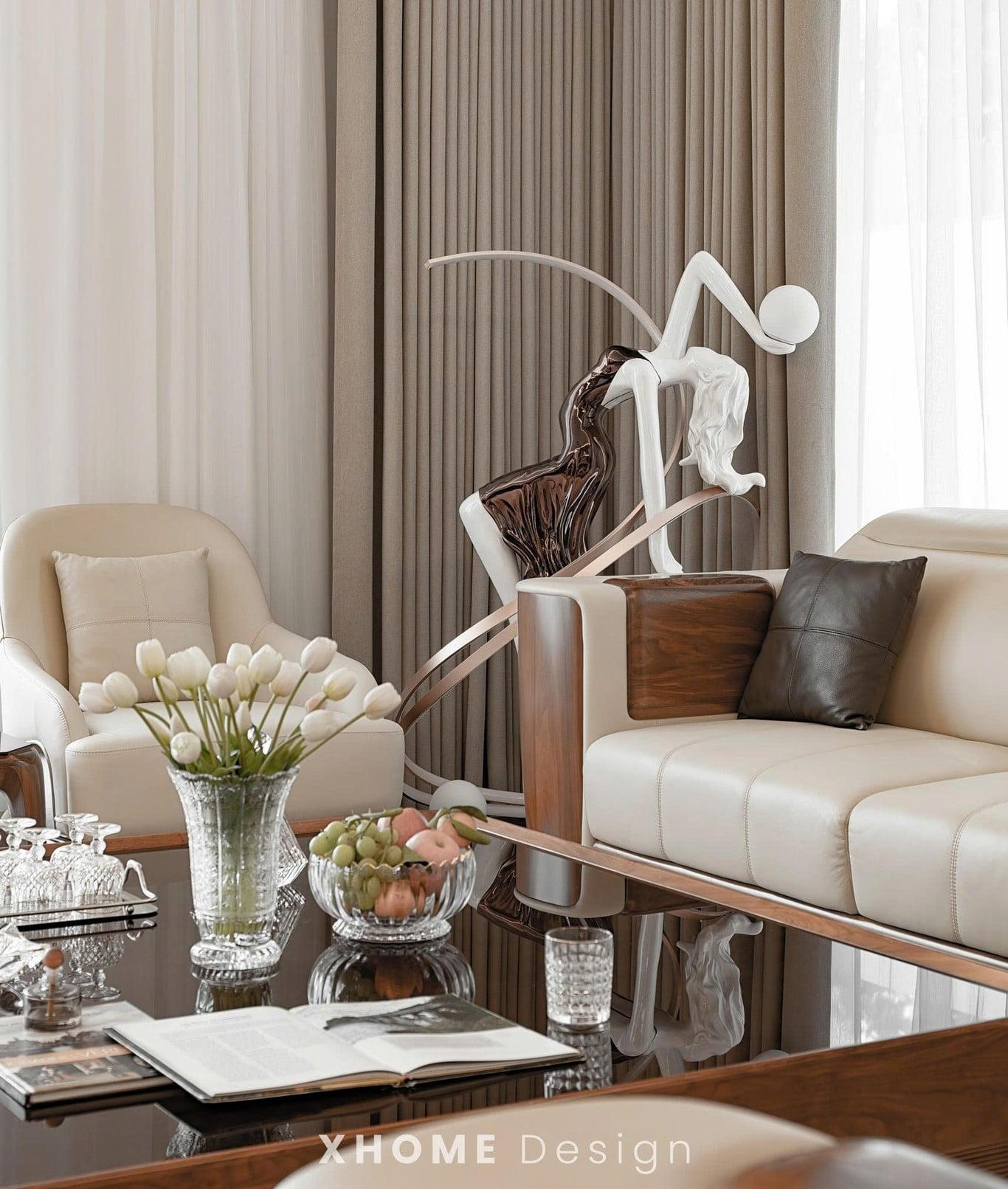
Why is natural walnut wood the 'king' of interior design for luxury villas?
Stepping into a luxury villa, the first thing that catches the eye and evokes the emotions of discerning connoisseurs is the presence of materials. Among hundreds of types... interior materials The current, natural walnut wood It has always maintained its top position, becoming the preferred choice of the elite. The allure of this wood comes not only from its outward beauty but also from its excellent physical and mechanical properties and profound feng shui significance.
Key characteristics of North American walnut wood (FAS)
While many sources of walnut wood are available on the market today, the highest quality comes from walnut wood imported directly from North America, especially the FAS (First and Seconds) grade. This is the highest grade, containing the most perfect wood, with the fewest dead knots and the highest utilization rate. The unique value of North American walnut wood lies in its color and grain pattern.
Walnut wood possesses a truly unique color spectrum, starting from the heartwood with a light brown, gradually transitioning to a rich chocolate brown, and sometimes shimmering with reddish-purple hues or dark, mesmerizing stripes. Under the influence of natural light or warm yellow lighting, the surface of walnut wood appears as if covered in a layer of velvet, radiating elegance, warmth, and a powerful presence. This is combined with an incredibly varied grain pattern. Unconventional, walnut wood grain is sometimes soft like waves, and sometimes swirls violently, forming stunning burl-like patterns. Each slice of wood is a unique work of art created by nature, ensuring that no two pieces of furniture are exactly alike, fulfilling the desire for exclusivity among the elite.
Besides its aesthetic value, the durability of North American walnut wood is also a key factor. Growing in harsh climates, walnut wood develops an extremely dense structure. It has excellent compressive and torsional strength, and is particularly well-adapted to the hot, humid, and dry climates of Vietnam. Thanks to its high natural tannin content, walnut wood is naturally resistant to pests and termites. When treated and dried according to international standards, warping and shrinkage are almost completely eliminated, helping furniture maintain its beauty and functionality for decades.
The Feng Shui significance of walnut wood furniture
For villa owners, feng shui is an indispensable factor when creating their dream home. In the five elements, wood represents the Wood element – a symbol of growth, vitality, and peace. Walnut wood, with its warm, deep brown color, belongs to the Wood element but also has a hint of the Earth element (earthy brown), creating a harmonious relationship (Wood generates Fire, Fire generates Earth), bringing balance and harmony to the space.
Using walnut wood furniture in a villa is considered by feng shui experts to be an excellent way to dispel negative energy, bringing a sense of security and stability. The warm, deep brown color helps soothe the mind, reduce stress, and attract prosperity, wealth, and good fortune for the homeowner. A home filled with the vitality of natural wood will be a solid foundation for prosperity, a harmonious family life, and a thriving career.
The application of walnut wood furniture in villa spaces.
The versatility of walnut wood allows it to be present in any space within a villa, from public areas showcasing grandeur like the living room, to private spaces requiring tranquility such as bedrooms or prayer rooms. Below are detailed applications in each functional space.
A luxurious living room, showcasing class and sophistication.
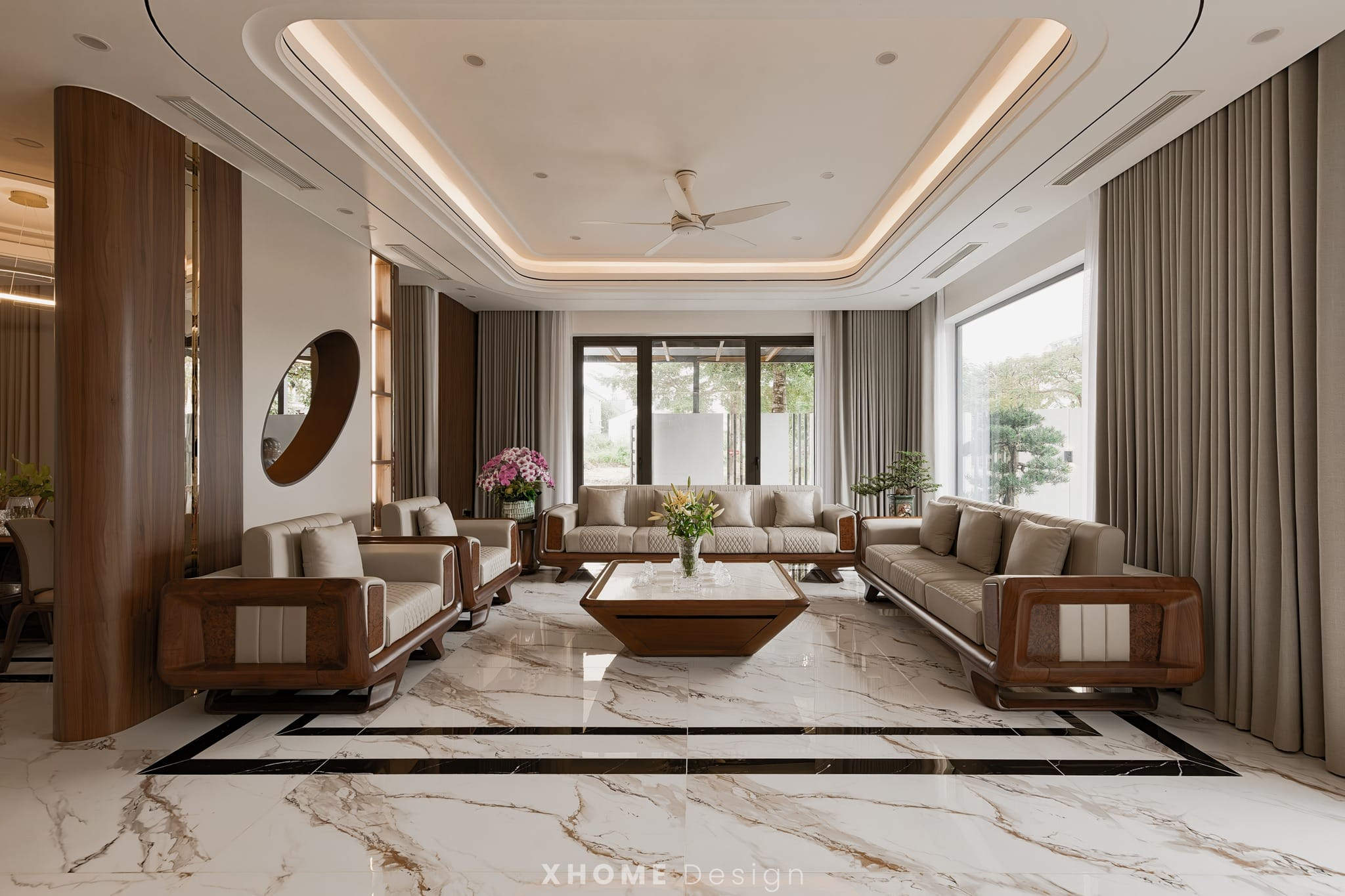
The living room is considered the "face" of the homeowner, the place where esteemed guests are welcomed, and also the space that best showcases the owner's aesthetic taste and financial capabilities. In the guide to designing natural walnut wood interiors for villas, the living room is always the area that receives the most investment of thought and budget.
The centerpiece of a villa's living room is often a solid walnut wood sofa or a walnut wood frame sofa combined with imported Italian natural cowhide leather cushions. The combination of the sturdy, imposing nature of large wood blocks with the soft, glossy sheen of high-quality cowhide leather creates an overall sense of authority and royalty. The armrests and chair legs are often subtly beveled or softly curved to showcase the swirling wood grain. Accompanying this is a coffee table with a solid walnut wood or natural stone top, a long, flat, modern TV stand, and floor-to-ceiling wine cabinets and display cabinets with integrated smart LED lighting. All these elements blend together to create an overwhelming, luxurious, yet incredibly warm and inviting space for entertaining guests.
The kitchen and dining area is cozy and well-equipped.
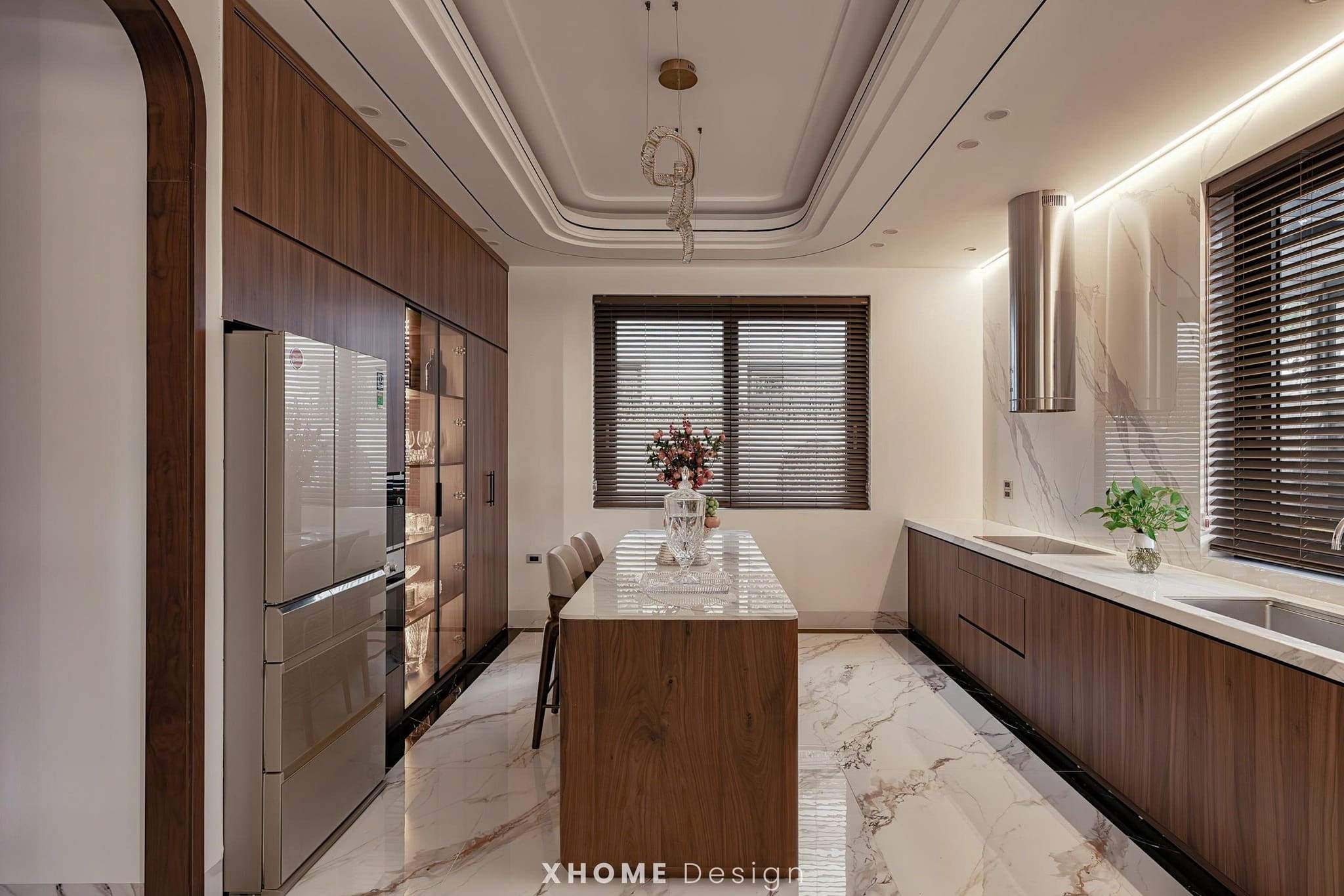
While the living room is a display of grandeur, the kitchen and dining room are the heart of the home, where the flame of family happiness is kept. Walnut wood, with its excellent heat and moisture resistance, is an ideal material for this space.
Walnut wood kitchen cabinets are typically designed in a modern style, with flat doors and minimal ornate carvings to facilitate easy cleaning and highlight the natural beauty of the wood grain. The combination of walnut kitchen cabinets with high-end quartz countertops, dark glass backsplashes, and smart kitchen appliances creates a convenient, clean, and sophisticated cooking space. In the dining area, a large, solid walnut (live-edge) dining table seating 10-12 people, paired with comfortable leather-upholstered chairs, is the perfect place for warm family gatherings or important business meetings. The warm glow from the crystal chandelier reflecting off the walnut tabletop further enhances the dining experience and creates a cozy atmosphere.
A sophisticated bedroom, reflecting a strong personal touch.
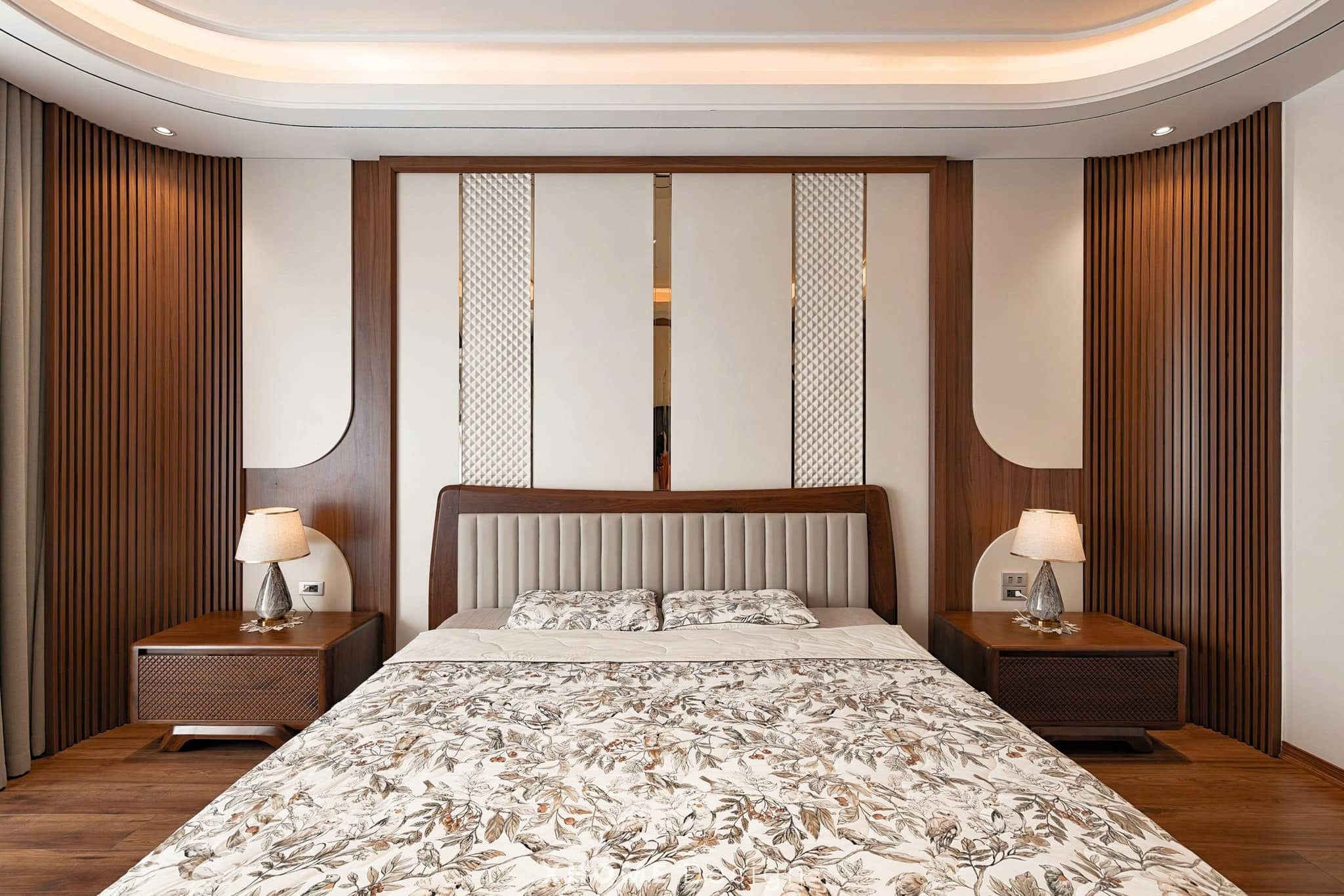
The bedroom is a space for rest and rejuvenation after a long, stressful day at work. Therefore, the interior design of a villa bedroom using walnut wood should aim for tranquility, relaxation, and reflect the owner's personal style.
A walnut wood bed with a stylish recessed (floating bed) or slanted leg design, and a headboard upholstered in premium leather or fabric, will be the centerpiece of the room. The deep brown color of walnut wood has a calming effect, helping the homeowner easily fall into a deep sleep. Surrounding it is a system of wardrobes with glass doors and walnut wood frames, a dressing table, bedside tables, and a TV stand, all designed in a coordinated style. The seamless blend of materials and colors creates a luxurious resting space reminiscent of a 5-star resort, where every detail cherishes the user's emotions.
The prayer room is a solemn space.
In East Asian culture, the ancestral altar room is the most sacred place in the home, expressing the reverence and gratitude of descendants towards their ancestors. Walnut wood, with its deep, dignified color and timeless durability, is the perfect choice for crafting altar room furniture.
Walnut wood altars are often intricately carved with traditional patterns such as the four mythical creatures, lotus flowers, and swastikas, but these are toned down to suit the modern villa space. CNC-cut partitions and walnut wood wall cladding, combined with warm yellow lighting, create a solemn, tranquil worship space, completely separate from the noise of the outside world. The presence of walnut wood in the worship room not only provides aesthetic beauty but also symbolizes the enduring and eternal nature of spiritual and family values.
See more: Construction of a complete 3-storey villa with walnut wood interior Hue Villa
Standard professional process for constructing interior furniture with natural walnut wood.
Transforming stunning 3D designs into sharp, realistic reality requires a standardized, transparent, and professional process for constructing interior spaces with natural walnut wood. Understanding this process allows investors to easily monitor progress, control quality, and assess the contractor's capabilities.
Step 1: Survey the current situation and finalize the design plan.
Every perfect project begins with precise measurements. Our team of architects and engineers will conduct a site survey of the villa, meticulously measuring every corner, checking the electrical and plumbing systems, gypsum ceilings, flooring, and other related architectural elements. Based on the existing conditions and the homeowner's wishes, the design team will advise on floor plan layouts, select a design style, and create detailed 3D drawings. After the homeowner approves the 3D drawings, the construction technical documents (2D drawings) will be developed, detailing each item, its dimensions, materials, and accompanying accessories.
Step 2: Production and quality control of wooden products at the factory.
This is the most crucial stage that determines the quality and durability of the product. The manufacturing process at the factory includes many rigorous steps:
- Selecting the wood blank: After being imported, North American walnut wood (FAS) is carefully selected by skilled artisans. The wood planks with the most beautiful grain and most uniform color are prioritized for front surfaces such as tabletops, cabinet doors, and chair backs.
- Preservation, drying and processing: Even after being dried abroad, the wood still needs to be re-moistened and treated to achieve the standard moisture content (8-12%), suitable for the Vietnamese climate, and to completely prevent cracking and warping.
- Woodworking: Using modern CNC machinery combined with the skillful hands of carpenters, the parts are cut, shaped, sanded, and assembled. The mortise and tenon joints must be perfectly tight and secure.
- Finishing paint: After inspection, the raw wood products will be transferred to the painting room. The high-quality Inchem painting process from the USA, with 5-7 layers (primer, gloss, anti-scratch coating), helps protect the wood surface, enhancing the beauty of the wood grain without losing the authentic feel to the touch.
Step 3: On-site installation
After completion at the workshop, the finished products will be carefully packaged with multiple layers of foam and PE film to prevent scratches during transportation to the villa. At the construction site, the construction team will assemble and adjust each detail according to the technical drawings. This process requires meticulousness and care to avoid affecting other architectural elements of the house. Protecting the floors and walls throughout the construction process is mandatory for professional contractors.
Step 4: Acceptance and handover
After installation and industrial cleaning are complete, representatives from the construction company and the client will conduct a final inspection. The inspection criteria include: dimensions, color, paint surface quality, structural integrity, and smooth operation of accessories (hinges, drawer slides). Once all criteria are met, the project will be handed over to the homeowner for use, along with a warranty booklet and detailed maintenance instructions.
Latest price quote for interior design and construction of a walnut wood villa.
Cost is always a top concern for investors when researching a guide to constructing interiors with natural walnut wood for villas. Walnut wood belongs to the luxury material segment, therefore the construction cost is not cheap. However, the value received is completely worth the money spent.
Factors that determine the cost of walnut wood interior design
The price for walnut wood interior design and construction is not fixed but fluctuates based on various factors:
- Origin and grading of wood: Grade 1 North American walnut (FAS) is the most expensive, costing 20-30% more than grade 2, grade 3 (1Com, 2Com), or South African walnut, and domestically sourced lumber.
- Style and complexity of the design: Furniture items that require intricate craftsmanship, complex curves, hand-carving, or the use of large, solid blocks of wood (such as solid wood dining tables or sofas) will require more wood and labor, resulting in higher costs compared to flat, modern designs.
- Dimensions and volume of work: Naturally, the larger the product and the more wood used, the higher the cost.
- Materials and accessories: The use of imported Italian natural cowhide leather, high-grade natural stone (Marble, Quartz), tempered glass, and smart hardware systems (Blum, Hafele, Hettich) will significantly increase the total investment cost of the project.
Estimated costs by item (for reference)
Because it belongs to the high-end material segment for luxury spaces, optimizing costs and minimizing wood waste requires the implementing unit to have certain skills. interior design and construction experience The villa is substantial. An accurate cost estimate should not only be based on the blueprints but also on careful calculations from the selection of wood grain to the surface treatment techniques.
To receive a detailed, personalized quote based on the area and actual needs of your project, please contact us. Contact XHOME Saigon directly. to receive in-depth consultation from our team of experts.
Valuable experience when constructing walnut wood interior for villas.
Investing a significant amount of money in walnut wood furniture, any homeowner would expect a perfect result. However, the current furniture market is quite complex, with the mixing of genuine and counterfeit products being common. Below are some hard-won lessons to help you avoid unnecessary risks.
How to distinguish between imported natural walnut wood and low-quality wood.
This is the most crucial point that every investor needs to understand. Many unscrupulous companies often use lower-grade walnut wood, domestically sourced lumber, or even oak or ash wood painted to resemble walnut to deceive customers and profit illegally.
- Identify it by color and wood grain: Genuine North American walnut (FAS) has a distinctive chocolate brown color with depth and a natural gradient from the heartwood to the bark. The grain is sharp, naturally swirling, and features unique knot-shaped spots. In contrast, artificially painted walnut often has a dull, pale, or excessively dark color, with a faint, repetitive grain due to artificial painting, lacking depth.
- Identifying through wood grain (wood pores): Genuine walnut wood has very small, fine, and even grain. Ash or oak wood painted to resemble walnut often has large, coarse grain, easily noticeable with the naked eye or by touching the surface.
- Identification through end grain: If you have the opportunity to inspect the timber at the workshop, look at the cross-section of the piece. Real wood will have a uniform color and texture from the outside in, while fake painted wood will only have color on the surface layer.
- Stiffness and weight: North American walnut wood is very hard, heavy, and solid. Domestic lumber of lower quality is usually lighter, more porous, and easily dented upon strong impact.
The art of combining materials enhances the beauty of walnut wood.
A luxurious villa space cannot rely solely on wood as the primary material. Overuse of wood can make the space feel heavy and gloomy. The art lies in the harmonious combination of walnut wood with other high-end materials.
Imported Italian natural cowhide leather (especially the Mastrotto line) is the perfect companion for walnut wood. The softness and sheen of the leather, combined with the sturdy, rustic nature of the wood, create a harmonious blend of tactile and visual senses. Furthermore, using natural stone (such as white Volakas marble with cloud patterns or black lightning granite) for coffee table tops and kitchen countertops creates a striking color contrast, brightening the space. Tea-colored tempered glass, ribbed glass, and LED lighting in display cabinets and wardrobes are also excellent design techniques to enhance the modern, dazzling beauty of walnut wood interiors.
Criteria for selecting a reputable design and construction company.
To ensure the quality of your construction project, choosing the right contractor is crucial. Evaluate contractors based on the following criteria:
- We have our own manufacturing facility: Absolute priority will be given to units that own the property. large-scale manufacturing plantEquipped with modern machinery, this allows for 100% control over the quality of raw materials and manufacturing processes, while optimizing costs by eliminating intermediaries.
- The work process is clear and transparent: A reputable company will have a professional workflow from consultation, design, quotation, production to installation. The contract must clearly state the type of materials (FAS North American walnut wood), the origin of accessories, the construction schedule, and penalty clauses for breach of contract.
- Practical experience and case studies: Ask the construction company to show you examples of their completed villa projects, or ideally, visit those projects in person to assess the quality of the woodwork, the paint finish, and their actual construction capabilities.
- Long-term warranty and maintenance policy: Natural wood always requires care. Reputable companies usually offer a 1-2 year warranty and 5 years of maintenance, and are ready to assist customers in resolving any issues that may arise during use.
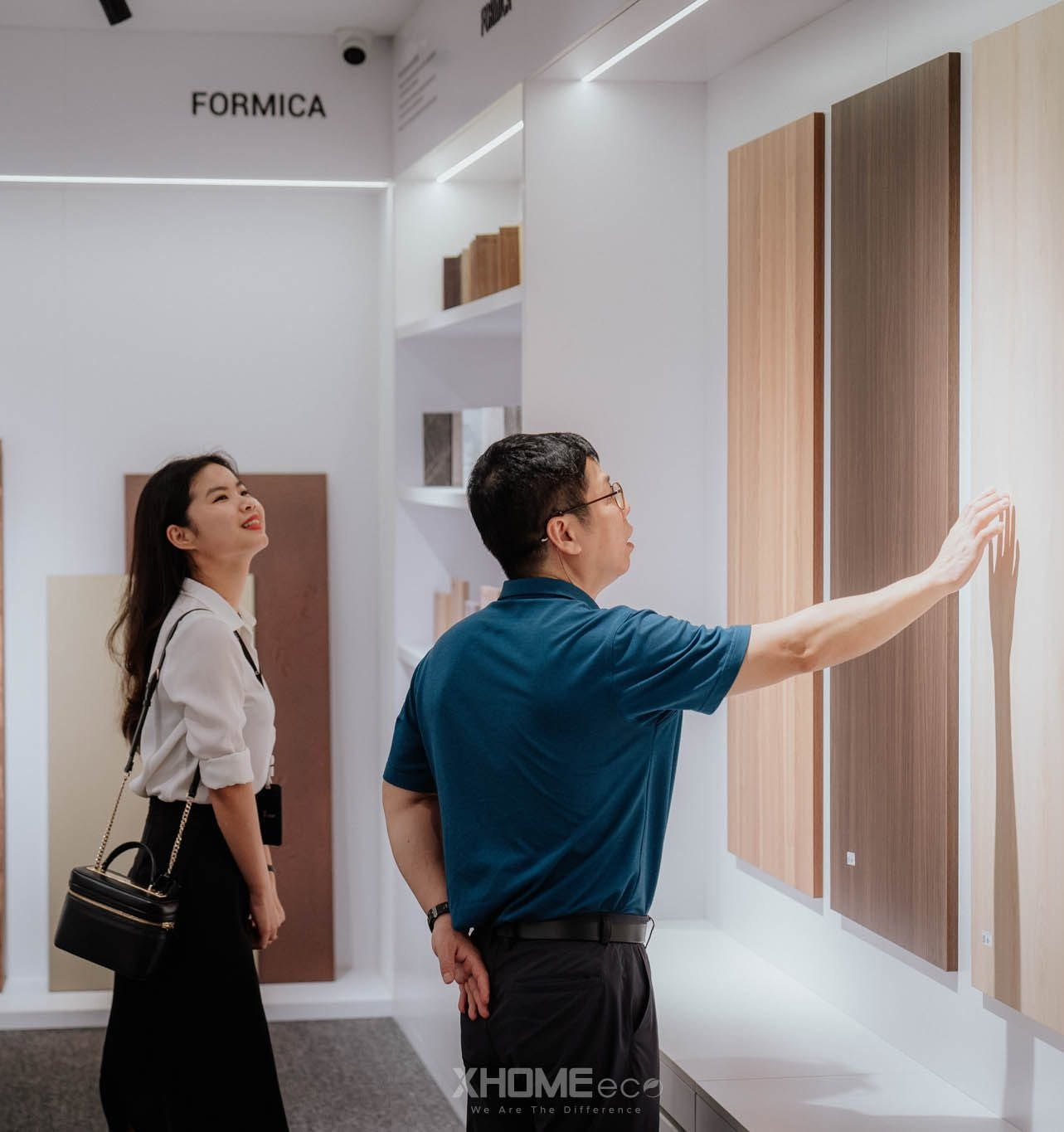
Checklist for quality control of walnut wood interior construction at the project site:
- Color check: Is the paint color even? Are there any streaks or drips?
- Surface inspection: Does the wood surface feel smooth and cool to the touch? Are there any rough edges or splinters?
- Structural inspection: Are the mortise and tenon joints tight? Are there any gaps or cracks? Does the furniture stand firmly and not wobble when force is applied?
- Check the accessories: Do the hinges and drawer slides operate smoothly and quietly? Are the cabinet doors sagging or misaligned?
- Check for odors: Does the new product have a very strong, unpleasant paint smell? (High-quality Inchem paints usually have a mild smell that dissipates quickly).
Guide to maintaining walnut wood furniture to keep it looking new and beautiful.
Although walnut wood boasts exceptional durability, "longevity depends on the owner." To ensure these luxurious furniture pieces retain their original beauty and shine, homeowners need to understand the principles of post-construction maintenance.
For daily cleaning, absolutely avoid using harsh chemical detergents, soaps, or glass cleaners sprayed directly onto the wood surface, as these will damage the protective paint layer and dull the natural shine. Instead, use a soft, dry or slightly damp microfiber cloth to wipe away dust and dirt. Every 3-6 months, you can use beeswax or specialized wood conditioners to polish the wood, providing moisture, minimizing scratches, and restoring its vibrant color.
The surrounding environment also greatly affects the lifespan of wood. Avoid exposing walnut wood furniture to direct, intense sunlight for extended periods, as UV rays can cause the wood to fade. Use double-layered curtains for large windows. Maintain ideal indoor humidity levels (around 45-55%). Avoid placing furniture too close to heat sources such as fireplaces, gas stoves, or directly under air conditioner vents to prevent thermal shock that can cause the wood to crack.
Frequently Asked Questions (FAQ) about walnut wood interior design
During the consultation and implementation process of our guide to designing natural walnut wood interiors for villas, we often receive several common questions from investors. Below are quick answers to these questions.
Is natural walnut wood susceptible to termites?
North American walnut wood has a very high natural tannin content, which is extremely effective at resisting pests and termites. Furthermore, before being used in production, the wood undergoes an industrial drying and treatment process that meets international standards. Therefore, the likelihood of walnut wood furniture being attacked by termites is extremely low, almost zero under normal use conditions in modern villas.
How long does it take to complete the interior design of a walnut wood villa?
Construction time depends on the workload and complexity of the design. Typically, for a standard villa, the process from finalizing the design drawings, factory production, to complete installation at the construction site takes approximately 45 to 60 days. For super villas with a large volume of intricately carved wooden furniture, the time may extend to 3 to 4 months.
Should walnut wood be used throughout the entire villa?
Walnut wood is beautiful and luxurious, but overusing it to clad entire walls, ceilings, and floors can make the space feel dark and cramped. Experts advise using walnut wood as an accent for key furniture pieces (sofas, beds, wardrobes, dining tables) and combining it harmoniously with light-colored walls, white plaster ceilings, and light-colored stone or engineered wood flooring to create visual balance, making the villa space feel more airy, modern, and sophisticated.
Hopefully, with A guide to designing and constructing interior spaces with natural walnut wood for villas. With the detailed information from A to Z above, investors have equipped themselves with sufficient knowledge and confidence to begin creating their dream living space. If you are looking for a reputable walnut wood interior design and construction company with its own manufacturing facility and proven capabilities through hundreds of projects, then look no further. villa interior construction For premium products, contact us now for expert advice and the most detailed price quote!
- Email: info@xhomesg.com.vn
- Floor 12.B1 – REE Tower, 9 Doan Van Bo Street – Xom Chieu Ward – Ho Chi Minh City
- Hotline: 0899199786


