

Equipment Knowledge of selecting moisture-resistant engineered wood for riverside villas. This is a crucial step in protecting the valuable interior assets of investors. Unlike inner-city properties, riverside villas possess a unique microclimate with consistently high humidity and constant temperature fluctuations between day and night. This harsh environment is a silent enemy that destroys ordinary interior materials, causing mold, peeling, warping, and termite infestation after only a short period of use. To create a living space that is both artistic and luxurious, while ensuring timeless durability befitting the villa's prestige, a deep understanding of different wood types, surface finishes, and processing technologies is essential for both architects and homeowners.
The unique microclimate of riverside areas and the challenges for villa interior design.
Riverside areas have always been sought after by the elite due to their stunning natural scenery, spacious surroundings, and abundant feng shui energy. However, behind this idyllic beauty lies an extremely challenging technical problem for designers and architects. interior constructionThe microclimate in these areas possesses physical and chemical characteristics that directly impact the structure of materials, especially wood-based products.
Why do wooden furniture items typically deteriorate quickly in riverside areas?
The root cause lies in air humidity. In riverside villas, environmental humidity frequently exceeds 80%, even reaching saturation on rainy days or during morning fog. Natural wood and standard engineered wood materials are hygroscopic. When exposed to humid air, the capillaries and wood fibers act like sponges, continuously absorbing water into the structure. Furthermore, the temperature difference between day and night is much greater in areas near water sources than in the city center. During the day, the high temperature causes the surface of the material to expand; at night, the sudden drop in temperature, combined with water vapor rising from the river, creates condensation on the surface and seeps into the crevices of the furniture. Particularly in Northern Vietnam, the humid spring season exacerbates this problem, causing furniture surfaces to constantly "sweat." This continuous cyclical shrinkage and expansion due to temperature and humidity breaks down the adhesive bonds within the wood core, rapidly weakening its mechanical structure.
Consequences of choosing the wrong type of engineered wood
Lack of knowledge and the wrong choice of materials for a riverside villa can lead to extremely costly consequences. First, there's the issue of thickness swelling. When the wood core absorbs water, it swells, deforming the surface and causing cracks in decorative finishes like melamine or veneer. Next, there's the risk of mold and bacteria outbreaks. The damp, sunless environment in some hidden corners of the house creates ideal conditions for mold spores to thrive, not only destroying the aesthetics but also spreading unpleasant odors, directly affecting the respiratory system and health of the homeowner. Furthermore, high humidity softens the wood fibers, making furniture vulnerable to termite infestation. For a riverside villa worth tens, even hundreds of billions of dong, the warping and deterioration of kitchen cabinets, wardrobes, or decorative wall panels after only 1-2 years of use is an unacceptable trade-off. It not only reduces the value of the property but also causes inconvenience, wastes time, and incurs huge costs for maintenance and replacement.
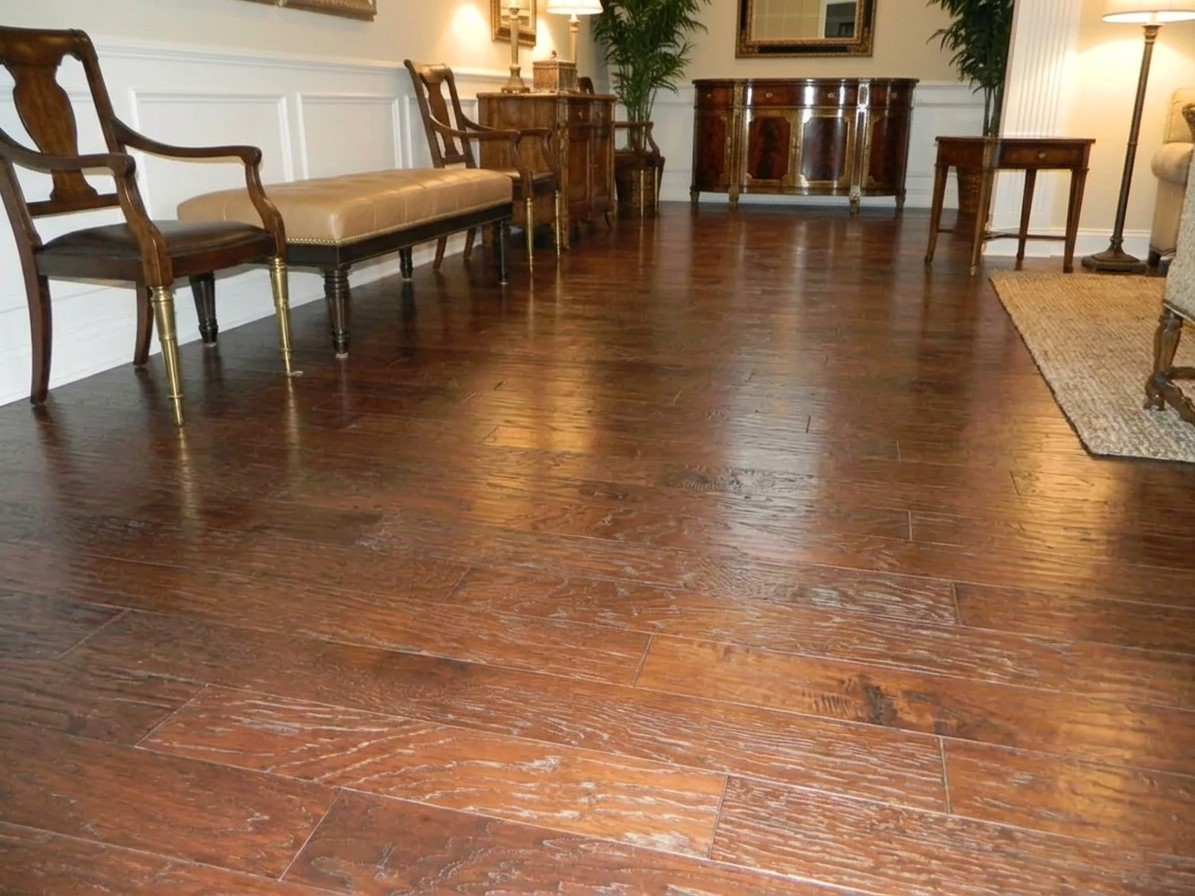
Classification and evaluation of current moisture-resistant engineered wood core products.
The current market for interior materials offers a wide variety of engineered wood core solutions. However, not all types labeled 'moisture-resistant' are capable of withstanding the harsh environment of a riverside villa. Properly classifying and evaluating the technical characteristics of each product line is the most important step.
Moisture-resistant green core MDF: Is it really sufficient for a riverside villa?
MDF (Medium Density Fiberboard) with a moisture-resistant green core is the most common material in Modern villa interior design and construction. MDF is composed of small, crushed wood fibers mixed with adhesive and pressed under medium temperature and pressure. The difference between moisture-resistant MDF and regular MDF is the presence of MUF (Melamine Urea Formaldehyde) glue or phenolic resin, along with a green indicator for differentiation. The advantages of green core MDF are a smooth, flat surface, ease of pressing decorative surfaces, ease of cutting and machining, and a reasonable price. However, for riverside villa environments, green core MDF only provides a basic solution. The limit of green core MDF's durability lies in its wood fiber density (usually ranging from 650 – 750 kg/m³). When exposed to humidity >85% for extended periods or directly splashed with water, the wood fiber bonds are still at risk of breaking, leading to swelling. Therefore, green core MDF is not an indestructible 'shield' and should only be used in dry, climate-controlled areas inside the villa.
HDF core with superior moisture resistance: A safe choice for open spaces.
HDF (High Density Fiberboard) is a comprehensive upgrade of MDF. The HDF production process requires more advanced technology, with finer wood fibers pressed under extremely high pressure and temperature. The density of HDF typically ranges from 800 kg/m³ to over 1000 kg/m³. Thanks to this dense structure, the gaps between the wood fibers are almost completely eliminated, making it very difficult for water molecules to penetrate. Currently, Black HDF (black core HDF) or Green HDF, which are highly regarded by experts, are on the market. HDF's water resistance, strength, impact resistance, and sound insulation capabilities are far superior to MDF. For open spaces in riverside villas, which are frequently exposed to humid winds, or ground-floor areas susceptible to moisture rising from the soil and river, super moisture-resistant HDF is a worthwhile investment, ensuring excellent dimensional stability for large cabinet systems and wall cladding.
Plywood: Mechanical strength and water resistance
Plywood, also known as laminated wood, is made from multiple thin layers of natural wood veneer arranged perpendicularly to each other in the direction of the wood grain and pressed tightly together with specialized glue under high temperature. This cross-graining structure gives plywood extremely high mechanical strength, excellent screw-holding ability, and especially superior resistance to warping and shrinkage compared to fiberboard (MDF, HDF). For use in riverside villas, the type of plywood chosen must be water-resistant plywood (Marine Plywood or WBP Plywood). WBP (Water Boiled Proof) is not the name of a type of wood, but a standard for the type of glue used (usually high-grade Phenolic or Melamine glue). WBP plywood can withstand immersion in boiling water for many hours without delamination. The combination of the cross-linked physical structure and the chemical properties of WBP adhesive makes plywood an ideal material for kitchen cabinets and bathroom vanity systems, where both the heavy load-bearing capacity of stone countertops and the risk of water leakage are required.
WPC wood-plastic composite: A specialized solution for wet areas.
WPC (Wood Plastic Composite), or wood-plastic composite, is a hybrid material made from natural wood powder and plastic (usually PVC, PE, or PP) along with additives. The introduction of WPC has provided a revolutionary solution for areas frequently exposed to water. Because its composition contains a large proportion of plastic polymers encapsulating wood particles, WPC possesses 100% water resistance, is completely immune to mold and termites, and will never swell or rot even when submerged in water for extended periods. For riverside villas, WPC is an irreplaceable "special solution" for items such as bathroom vanity cabinets, laundry area cabinets, or even semi-outdoor furniture like BBQ area kitchen cabinets. Although WPC's screw-holding and bending strength are not as good as Plywood or HDF, with proper structural design, it is still a material that guarantees lasting durability against water damage.
See more: What is industrial wood? Classification and application in interior construction
Key criteria when choosing engineered wood for riverside villas.
To avoid being misled by the flowery advertisements from suppliers, investors and architects need to understand the core technical specifications. Evaluating the quality of engineered wood cores must be based on scientific, transparent, and verifiable measurement standards.
Understanding technical specifications: Swelling rate and wood density
The two most important indicators determining the moisture resistance of wood panels are Thickness Swelling (TS) and Density. Thickness Swelling is measured by soaking a wood sample in water for 24 hours at a standard temperature, then measuring the increase in thickness. For riverside villa interiors, strict standards require that the thickness swelling of high-grade moisture-resistant MDF/HDF panels must be less than 8% (even high-end imported European panels can achieve less than 5%). If this figure exceeds 12%, the material is not suitable for the riverside environment. The second indicator is Density (kg/m3). The higher the density, the denser the panel, with fewer pores, thus minimizing the space for water penetration. As analyzed, prioritize panels with a density of 800 kg/m3 or higher (HDF standard) for moisture-sensitive areas.
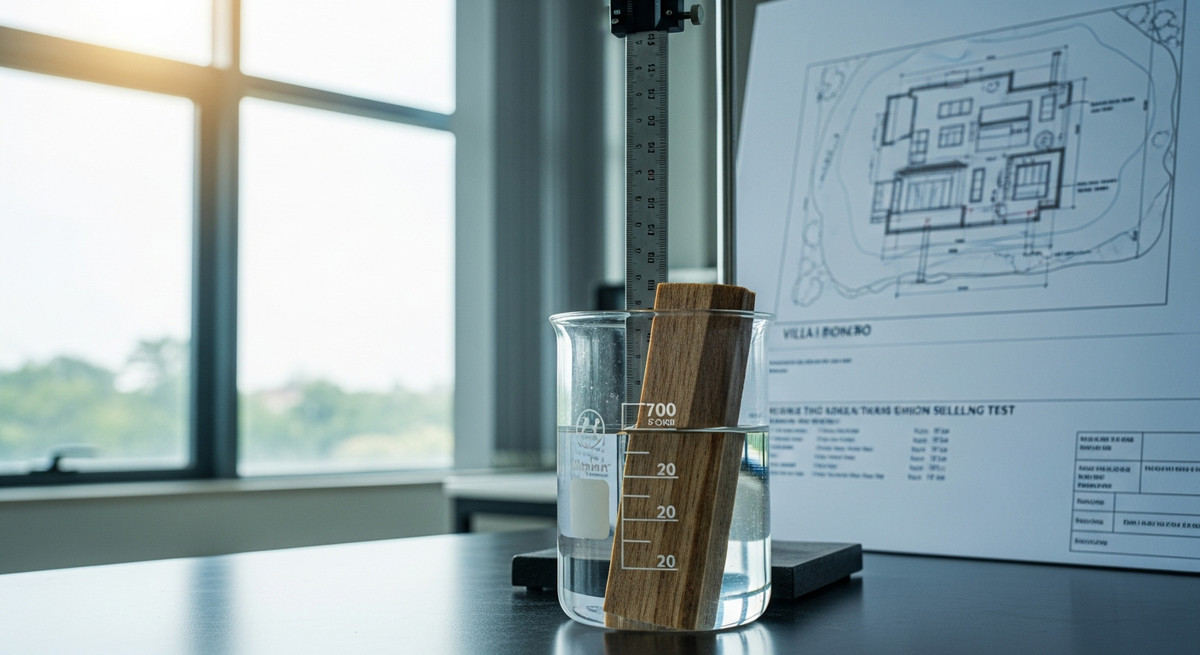
The importance of adhesives in moisture-resistant wood cores.
Many people mistakenly believe that wood fibers themselves are water-resistant, but in reality, the "heart" of moisture-resistant wood core is the adhesive. Conventional UF (Urea Formaldehyde) glue is easily hydrolyzed when exposed to water, causing the board to disintegrate quickly. To enhance moisture resistance, manufacturers use MUF (Melamine Urea Formaldehyde) glue – where the melamine component creates stronger cross-links, preventing structural breakdown when exposed to moisture. At a higher level, phenolic glue (commonly used in water-resistant plywood or compact panels) creates a polymer network that is insoluble in water, providing almost absolute water resistance. When reviewing materials for a villa project, requiring contractors to provide Certificates of Origin (CO) and Certificates of Quality (CQ) specifying the type of glue used is an indispensable risk control step.
Formaldehyde emission standards that are safe for health.
One often overlooked but extremely important factor for the luxury real estate segment is health and safety standards. Formaldehyde is a volatile organic compound (VOC) present in most industrial wood adhesives. At high concentrations, this gas causes eye irritation, suffocation, and is a carcinogen if exposed for a long time. Riverside villas often have enclosed spaces and use central air conditioning systems; therefore, the emissions from tens of cubic meters of interior wood, if not controlled, will accumulate into an invisible 'toxic chamber'. Developers need to insist on using wood cores that meet E1 emission standards (according to European standards), or ideally E0, Super E0, or Carb P2 (strict US standards). E0/Carb P2 compliant boards have near-zero formaldehyde emissions, ensuring absolutely clean air for families, especially the elderly and young children.
A comprehensive 'moisture-locking' solution: Combining wood core, surface coating, and edge banding techniques.
A common mistake in the furniture industry is focusing solely on the wood core, forgetting that even the best wood core is only the inner layer. If the outer layer is exposed, moisture will still penetrate and damage the material over time. A perfect interior solution for a riverside villa must be a harmonious combination of high-quality wood core, waterproof surface coating, and the most advanced edge banding technology.
Choose between laminate and acrylic surface finishes for optimal waterproofing.
The surface finish not only determines the aesthetics but also acts as a protective barrier, preventing water and moisture penetration. Melamine is the most common surface due to its low cost and wide range of colors. However, melamine is essentially just a thin layer of decorative paper impregnated with glue (approximately 0.1-0.2mm thick). In the extremely high humidity environment of a riverside villa, melamine is easily scratched and insufficient to prevent moisture from penetrating the surface. Instead, laminate and acrylic are the two optimal choices. Laminate (High-pressure laminate – HPL) is made from multiple layers of Kraft paper pressed under extremely high pressure and temperature, with a thickness of 0.6-1.2mm. This multi-layer structure creates a super-hard, scratch-resistant, heat-resistant, and completely waterproof surface. Acrylic (transparent plastic) offers an absolutely glossy and luxurious look. Being a solid plastic, acrylic is completely impervious to water. Applying a laminate or acrylic coating to HDF or plywood cores creates interior panels that are virtually impervious to moisture.
PUR edge banding technology: The key to preventing water from penetrating the wood core.
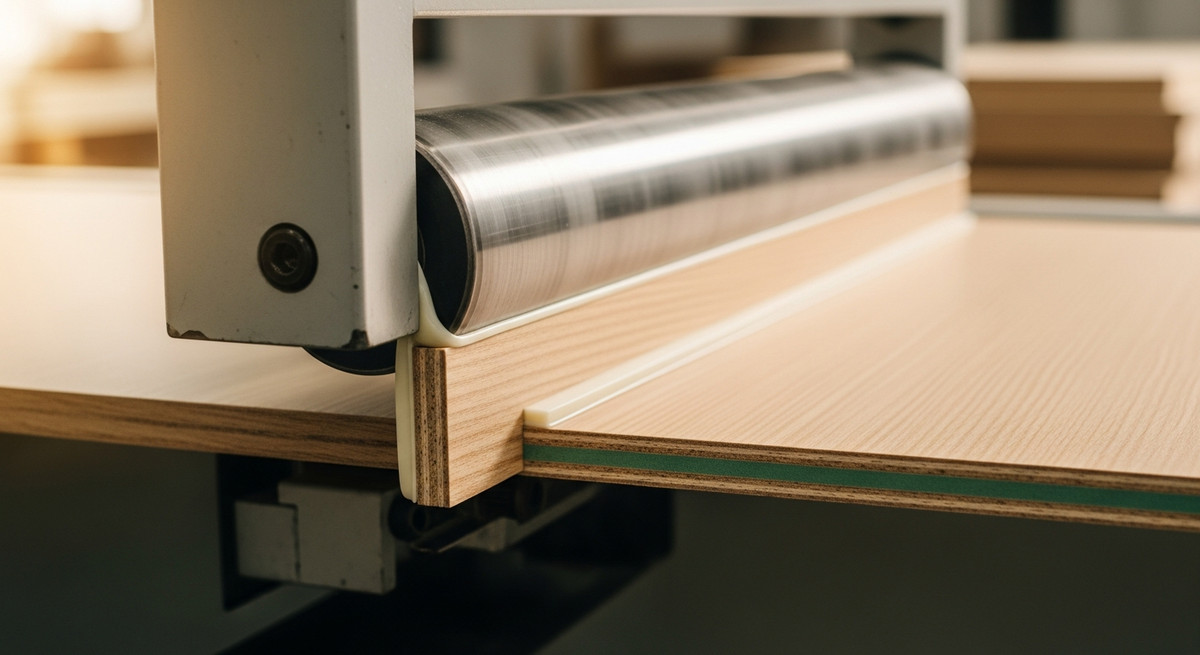
The fatal flaw of all engineered wood panels is their edges. No matter how tightly the surface is coated with acrylic or laminate, if the edges aren't sealed, moisture from the air near the river will seep through these tiny gaps, causing capillary action and drawing water deep into the wood core. This is where edge banding technology plays a crucial role. Most budget woodworking workshops currently use EVA (Ethylene Vinyl Acetate) glue for edge banding. EVA glue has the major drawback of easily melting at high temperatures and losing its adhesive properties when exposed to water. For high-end furniture, PUR (Polyurethane) edge banding technology is a mandatory standard. PUR glue works by chemically reacting with moisture in the air to create permanent cross-linking. Once dry, the PUR glue becomes a tough, high-temperature resistant, and 100% waterproof plastic film. Furthermore, PUR edge banding technology combined with high-precision automatic edge banding machines creates a 'seamless edge banding' effect, making the boundary between the surface and the edge banding almost invisible. This not only enhances aesthetics and creates a seamless look for the product but also seals off all avenues for moisture penetration, providing absolute protection for the wood core.
Consulting on the application of engineered wood core materials for each space in the villa.
Applying the highest quality materials uniformly to the entire villa is not a smart economic decision. A skilled interior designer will know how to allocate the budget and select materials appropriate to the risk level of each specific area, ensuring maximum durability while optimizing costs for the investor.
High-risk areas: Kitchen cabinets, bathrooms, and laundry rooms.
These are "hot spots" in any home, and for riverside villas, the risk is multiplied. Lower kitchen cabinets frequently face the risk of water leaks from sinks, water filters, and dishwashers, plus the fumes from cooking. Bathrooms and laundry rooms are areas with constant humidity. In these areas, compromise is not an option. The top recommendation is to use 100% WPC (Wood Plastic Composite) core for the entire sink cabinet and washbasin compartment of the kitchen cabinets. For the remaining kitchen cabinet compartments, water-resistant plywood (WBP) with laminate or acrylic coating, combined with PUR edge banding, is the perfect solution, ensuring good load-bearing capacity for the countertop and smart accessories, while completely eliminating concerns about swelling and mold.
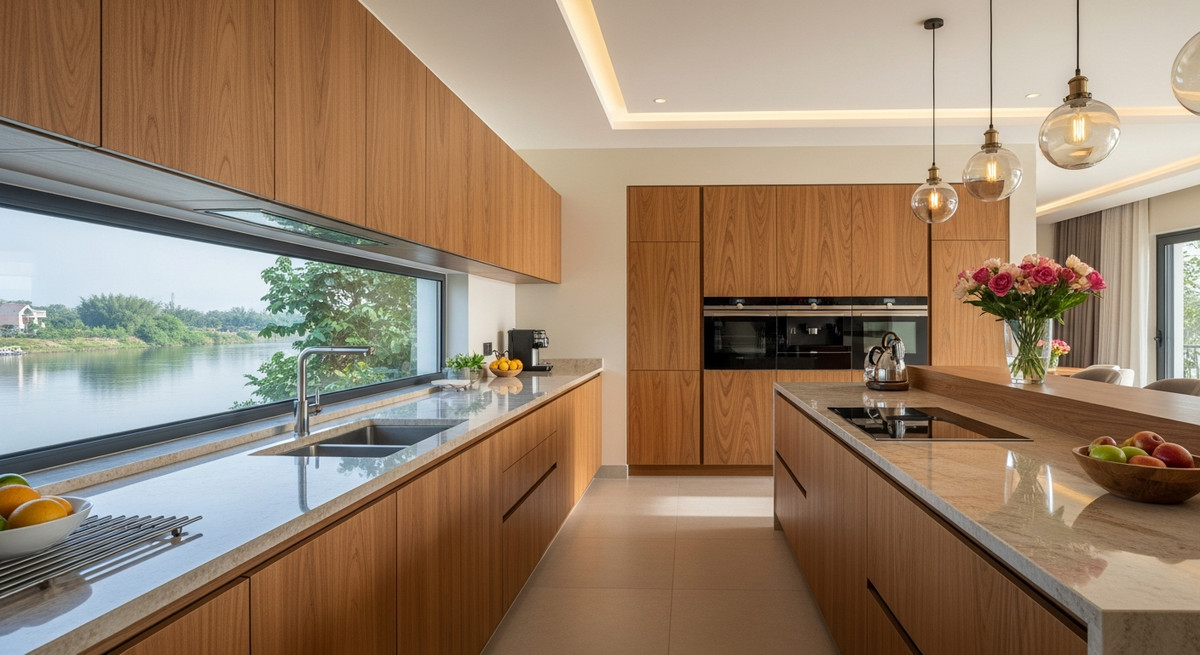
Common living areas: Living room and dining room
The living and dining rooms of riverside villas are often designed with open spaces and large panoramic glass walls to maximize river views. Although not directly exposed to the water, these areas are most strongly affected by the humid breezes carrying moisture from the river. Items such as large decorative wall panels, TV cabinets, wine cabinets, and shoe cabinets require structural stability and resistance to warping due to temperature differences between day and night. High-density moisture-resistant HDF (Black HDF/Green HDF) with natural veneer, laminate, or high-quality paint is the ideal choice. The high density of HDF ensures that large wall panels maintain perfect flatness, without ripples or surface cracks even after many years of use.
Relaxation area: Bedroom and dressing room
Bedrooms and walk-in closets are typically located on higher floors, in enclosed spaces with well-controlled climates thanks to air conditioning and dehumidifiers. The risk of humidity is significantly lower here compared to the ground floor. Therefore, to optimize costs while ensuring quality, investors can flexibly use high-grade moisture-resistant green core MDF. However, the most important criterion in this area should not be water resistance, but rather health and safety standards. The massive wardrobe system in the walk-in closet uses a large amount of engineered wood. It is mandatory to choose moisture-resistant MDF that meets E0 or Carb P2 emission standards to ensure a completely pure resting space, free from the pungent smell of formaldehyde, protecting the sleep and long-term health of family members.
Frequently Asked Questions (FAQ) about engineered wood framing for riverside villas
During the consultation and villa interior construction For hundreds of high-end projects, experts frequently receive questions from clients. Below are detailed answers to the most common questions, helping investors gain a clearer understanding before making decisions.
- Is green core MDF suitable for kitchen cabinets in a riverside villa?
The answer is: It should not be used for lower kitchen cabinets, especially the sink area. Despite the 'moisture-resistant' label, green core MDF is still fiberboard and will swell if exposed to water for extended periods. For upper cabinets (less exposed to water), you can use green core MDF, but for absolute safety and consistent lifespan for the entire cabinet system, water-resistant plywood or WPC with PUR edge banding remains the gold standard. - Should you choose moisture-resistant HDF or plywood for the interior of a ground-floor unit near the river?
Depending on the application, if you need a perfectly smooth, flat surface for wall cladding, interior doors, or decorative cabinets, moisture-resistant HDF is a better choice due to its dense structure and lack of visible wood grain. If you need heavy-duty cabinets that can withstand heavy loads and hold screws well (such as kitchen cabinets or large bookshelves), water-resistant plywood will excel thanks to its superior cross-weave structure. - How can you distinguish between HDF and moisture-resistant MDF wood cores with the naked eye?
It's difficult to distinguish between them with the naked eye if the board has already been surface-coated. However, if you look at the cross-section of the wood core, you'll see that HDF core is much denser, smoother, and heavier than MDF. The wood fibers in HDF are ground so finely that the grains are almost invisible, while MDF still shows tiny wood fibers. Additionally, super moisture-resistant HDF usually has a characteristic black core (Black HDF), unlike the green color of regular moisture-resistant MDF. - By what percentage is the cost of furniture made with HDF/Plywood core higher than with MDF?
Generally, the cost of super moisture-resistant HDF or high-grade plywood is usually 30% to 50% higher than green core MDF, depending on the brand. Adding the cost of premium surface finishes (Laminate/Acrylic) and PUR edge banding technology, the total interior design budget can increase by approximately 20%–35% compared to using regular melamine-coated MDF. However, considering the product's lifespan and the value of the riverside villa, this price difference is a very affordable "insurance" against costly repairs and maintenance that could cost hundreds of millions of dong later on.
In summary, choosing moisture-resistant engineered wood for a riverside villa is not simply a matter of purchasing materials, but an investment of expertise requiring a deep understanding of technical aspects and the microclimate. By combining the right type of wood core (HDF, Plywood, WPC) with a high-quality surface finish and advanced PUR edge banding technology, investors can create luxurious, sophisticated, and timeless interior spaces, defying the harsh challenges of the riverside environment.
- Email: info@xhomesg.com.vn
- Floor 12.B1 – REE Tower, 9 Doan Van Bo Street – Xom Chieu Ward – Ho Chi Minh City
- Hotline: 0899199786


